Here’s What’s Normal — and What Isn’t
When summer temperatures climb into the upper 90s and triple digits in Rowlett and across North Texas, your air conditioner has a serious job to do. During the hottest part of the afternoon, you may notice your AC running for long periods or your indoor temperature creeping a few degrees above the thermostat setting. Does that mean something is wrong with your air conditioner? Not necessarily.
Extreme Texas heat can push even a properly operating air conditioning system close to its limits. However, there is a difference between an AC working hard because of the weather and an AC system that isn’t cooling properly. Here’s how Rowlett homeowners can tell the difference.
Is It Normal for an AC to Run Constantly During Extreme Heat?
During a typical summer day, your air conditioner should cycle on and off as it maintains the temperature you’ve selected on the thermostat. But when temperatures approach or exceed 100°F, longer cooling cycles can be completely normal. Your home’s air conditioner is constantly fighting heat entering through the roof, attic, windows, doors and exterior walls. The hotter it gets outside, the more heat your AC must remove from the house.
On exceptionally hot North Texas afternoons, your AC may run almost continuously for several hours. If the house remains reasonably comfortable and the system begins catching up as outdoor temperatures fall in the evening, the extended runtime may simply be a result of the weather.
How Cool Should My House Be When It’s 100°F Outside?
There’s no single temperature difference that applies to every home or HVAC system.
The ability of your air conditioner to maintain a particular indoor temperature depends on several factors, including:
- The size and efficiency of your AC system
- Your home’s insulation
- Attic temperatures and ventilation
- Window size and sun exposure
- Air leakage around doors and windows
- Ductwork condition
- Indoor humidity
- Thermostat settings
- The age and condition of the HVAC equipment
For example, maintaining 68°F inside a home during a 103°F Rowlett afternoon can require substantially more cooling capacity than maintaining 76°F.
If your AC is running continuously but the indoor temperature keeps climbing significantly, however, it’s worth investigating.
Signs Your AC May Actually Have a Problem
Extreme heat shouldn’t automatically be blamed for poor cooling performance.
Consider having your system inspected if you notice any of these symptoms:
Warm Air Coming From the Vents
The air coming from your supply vents should feel noticeably cooler than the room.
If the system is running but producing lukewarm or warm air, there could be a problem with the refrigeration cycle, compressor, airflow or another component.
Your Indoor Temperature Keeps Rising
Falling one or two degrees behind during the hottest portion of an unusually hot day is very different from watching the indoor temperature steadily climb.
If your thermostat is set to 75°F and the house reaches 82°F or higher while the AC runs continuously, something may be preventing the system from cooling effectively.
Weak Airflow
Place your hand near one of your supply vents.
If airflow seems noticeably weaker than normal, possible causes include a clogged air filter, blower problem, duct restriction or frozen evaporator coil.
Ice on the AC System
Ice forming on refrigerant lines or the indoor evaporator coil isn’t a sign that your air conditioner is working extra hard.
It’s a sign that something is wrong.
Restricted airflow or refrigerant-related problems can cause coil temperatures to fall below freezing. Continuing to operate a frozen system can make the problem worse.
The AC Never Catches Up at Night
This is another useful clue.
Once the sun goes down and outdoor temperatures fall, the cooling load on your house decreases considerably.
If your AC still can’t reach the thermostat setting later in the evening, the problem may involve more than simply extreme daytime heat.
Why an AC May Struggle During a Rowlett Summer
Several common HVAC problems become much more noticeable when the system is operating under a heavy cooling load.
Dirty Air Filter
A severely clogged filter restricts airflow through the HVAC system.
Reduced airflow can decrease cooling performance, increase operating time and potentially contribute to evaporator coil freezing.
Check your filter regularly during the summer, particularly when the AC is running heavily.
Dirty Outdoor Condenser Coil
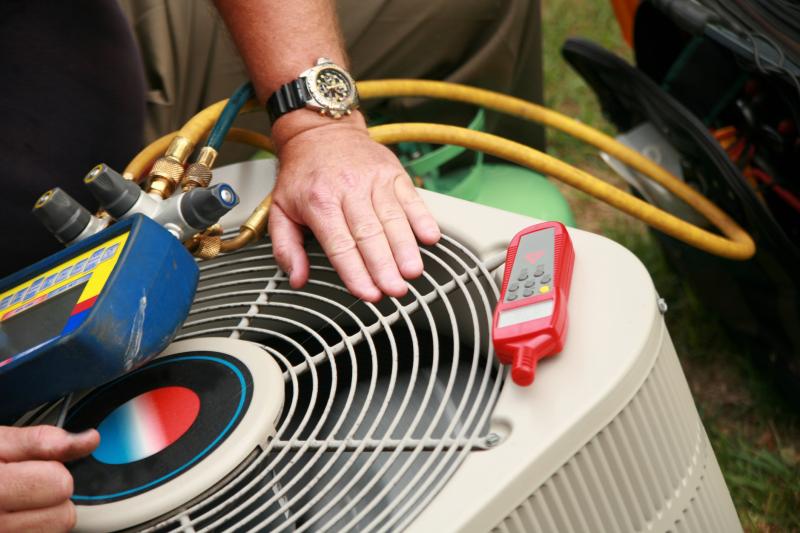
Your outdoor AC unit releases heat removed from your home.
Grass clippings, cottonwood, dirt, leaves and other debris can restrict airflow through the condenser coil and make it harder for the system to release that heat.
Keeping the area around the outdoor unit clear helps it operate properly.
Refrigerant Problems
Your AC depends on refrigerant to transfer heat from inside your home to the outdoors.
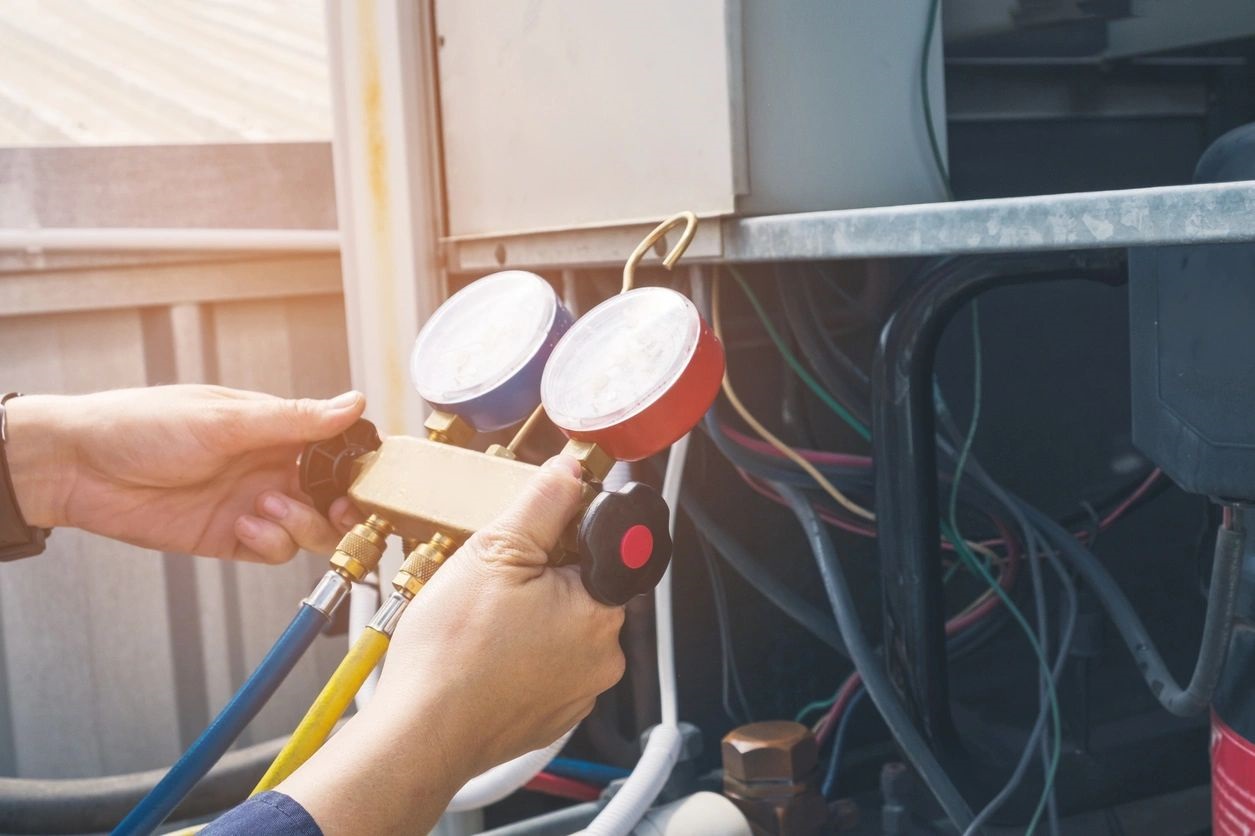
Low refrigerant typically indicates a leak and can significantly reduce cooling performance. Refrigerant problems should always be diagnosed and repaired by a qualified HVAC technician.
Leaky or Damaged Ductwork
Your air conditioner may be producing plenty of cold air but losing some of it before it reaches your rooms.
Leaks in ductwork running through a hot attic can waste conditioned air and pull additional heat into the system.
Aging AC Equipment
Air conditioners don’t maintain their original performance forever.
As components wear and efficiency declines, an older system may still perform adequately during mild weather but struggle once temperatures reach the upper 90s.
Extreme summer heat often exposes problems that weren’t obvious earlier in the year.
Don’t Keep Lowering the Thermostat
When the house feels too warm, the natural reaction is often to lower the thermostat several degrees.
Unfortunately, setting your thermostat from 75°F to 68°F doesn’t make the AC produce colder air or cool the house faster.
It simply tells the system to continue operating until it reaches the lower temperature.
If your AC already can’t maintain 75°F, asking it to reach 68°F won’t solve the underlying problem.
Help Your AC Through the Hottest Part of the Day
There are several simple things homeowners can do to reduce the cooling load during extreme heat.
Keep blinds or curtains closed on windows receiving direct afternoon sunlight. Use ceiling fans in occupied rooms to help people feel cooler without dramatically lowering the thermostat.
Avoid using ovens, clothes dryers and other heat-producing appliances during the hottest part of the afternoon when possible.
Most importantly, keep your HVAC system properly maintained. Clean filters, unrestricted airflow and properly operating equipment can make a significant difference during a North Texas heat wave.
When Should You Call an HVAC Technician?
If your air conditioner is running continuously during a 100°F afternoon but your home remains comfortable, your system may simply be working hard to keep up with extreme conditions.
But if temperatures continue climbing, airflow becomes weak, the system blows warm air, ice develops or the AC never catches up after sunset, it’s time to have the system checked.
Finding a developing problem early can sometimes prevent a complete AC breakdown during the hottest part of summer.
AC Repair in Rowlett, TX
At Barnaby Heating & Air, we understand what North Texas summers demand from an air conditioning system.
If your AC isn’t keeping your Rowlett-area home comfortable, our experienced HVAC technicians can inspect the system, determine why it’s struggling and recommend the appropriate solution.
Whether the problem is airflow, maintenance, a failing component or an aging air conditioner that’s no longer keeping up, we’ll help you understand your options.
Don’t wait for an AC that’s struggling to stop cooling completely. Contact Barnaby Heating & Air today to schedule AC service in Rowlett, TX and the surrounding area.